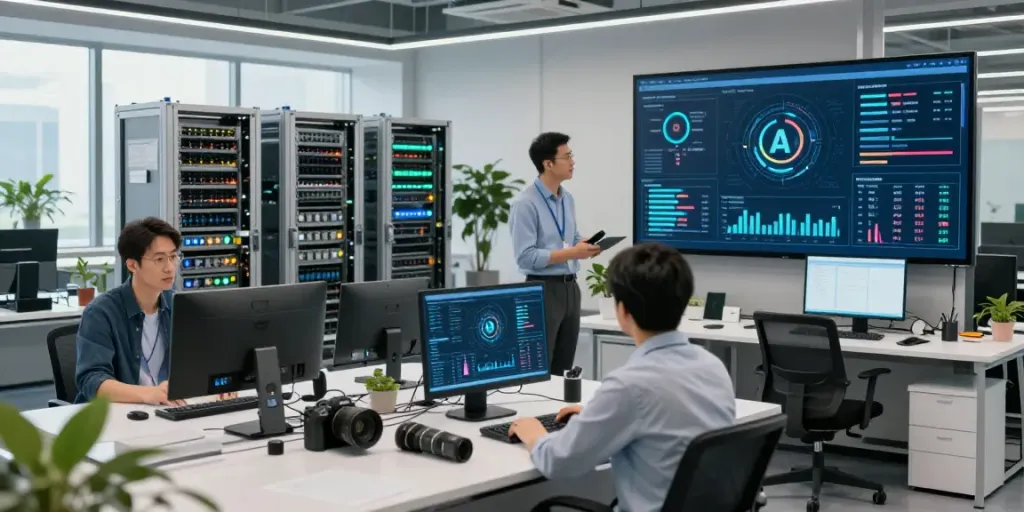
Understanding the AI Token Economy
The AI Token Economy is redefining how value is created and exchanged within artificial intelligence ecosystems. As AI technologies proliferate, the mechanisms by which they are powered are becoming increasingly sophisticated. At the core of this economy lies the concept of AI Token Economy, which facilitates transactions not just in financial terms but also in the computational resources necessary for AI operations. This article explores the essentials of the AI Token Economy, its critical components, and the role electricity plays in its operations.
What is the AI Token Economy?
The AI Token Economy refers to the systems and processes that use tokens as a means of measuring and facilitating transactions within AI technologies and infrastructures. Tokens in this context are not cryptocurrencies; rather, they serve as units of account that measure AI model usage and resource consumption. Each transaction in the AI landscape—whether it's querying a model or processing data—consumes a predefined number of tokens. Understanding this framework is essential for participants looking to engage in the economy effectively.
Key Components of AI Tokens
- Input and Output Tokens: These are the foundational elements of AI transactions. Input tokens represent requests made to AI systems, while output tokens represent the responses generated.
- Token-Metered Services: Many AI services are billed based on the token consumption, enabling a transparent and scalable pricing model for AI applications.
- Infrastructure Support: The functioning of the token economy relies heavily on robust infrastructure capable of managing high volumes of token transactions efficiently.
The Role of Electricity in AI Operations
Electricity is a fundamental pillar of the AI Token Economy. AI models, particularly those running on GPU (Graphics Processing Unit) infrastructures, require substantial power to operate effectively. The connection between electricity usage and the generation of tokens is direct; every computational task performed by an AI model is powered by electricity, and this consumption translates into token generation. As the demand for AI services grows, so does the need for reliable and scalable power supplies across various regions.
Power Plans for AI Infrastructure
To facilitate participation in the AI Token Economy, organizations and individuals can choose from various power plans designed to match their needs. These plans serve as a framework for how power resources are allocated to support AI operations, connecting users directly to the necessary electricity and computing capacity.
How AI Infrastructure Power Plans Work
AI Infrastructure Power Plans are structured to give participants a clear pathway to support the AI models and applications they wish to engage with. Users select a plan based on their anticipated power needs, which dictates the extent of their contribution to the electricity supply for AI factory operations. Once a plan is activated, it tracks power contributions, enabling the calculation of potential rewards based on actual usage and performance metrics.
Choosing the Right Power Plan
When selecting a power plan, users should consider their operational requirements and the scale of their AI endeavors. Plans can vary significantly in terms of power access, scalability, and associated costs. For example, basic plans may suit small-scale users or experimentation, while advanced plans are tailored for organizations operating large-scale AI applications requiring high computing capacity.
Calculating Your Contribution Rewards
The calculation of contribution rewards is a fundamental aspect of Power Plans. Each plan has specific rules governing how rewards are determined, typically hinging on the input and output tokens processed relative to the power supported. Participants can track their contributions and rewards through a transparent system that aligns their AI activities with their electricity usage.
Challenges and Opportunities in the AI Token Economy
While the AI Token Economy presents numerous opportunities, it also faces several challenges that stakeholders must navigate to maximize participation and value creation.
Common Misconceptions About AI Tokens
One of the prevalent misconceptions is that AI tokens function like cryptocurrencies. This misunderstanding can lead to confusion regarding their value and utility. AI tokens are used primarily for measuring computational usage rather than as a form of currency in a conventional sense.
Overcoming Barriers to Participation
Potential participants in the AI Token Economy may face barriers such as the complexity of understanding token mechanics, the perceived high cost of entry, or lack of access to necessary infrastructure. Addressing these barriers through educational resources and accessible infrastructure will be crucial for broadening participation.
Future Opportunities in AI Token Utilization
The future of the AI Token Economy looks promising, with new technologies emerging that can enhance how tokens are utilized. Opportunities exist to leverage artificial intelligence for optimizing electricity consumption, creating more efficient power allocations, and developing innovative applications that can maximize the functionality of existing AI models.
Real-World Applications of AI Tokens
Examining how AI tokens are applied in real-world scenarios provides insight into their practical value and operational importance.
Case Studies on AI Token Implementation
Several case studies highlight companies that successfully implemented AI token systems to streamline operations and enhance value. For instance, a logistics company adopted token-based metering to optimize routing algorithms, resulting in reduced fuel consumption and improved delivery times.
Impact on Businesses and Consumers
The adoption of AI tokens has implications for both enterprises and end consumers. Businesses can utilize AI tokens to lower operational costs and improve service delivery, while consumers benefit from enhanced user experiences and potentially lower prices due to increased efficiencies.
How AI Factories Leverage Tokens for Efficiency
AI factories are leveraging tokens in various ways to enhance operational efficiency. For example, by monitoring token consumption patterns, these factories can optimize resource allocation and reduce waste, leading to greener and more sustainable operations.
Future Trends and Innovations in the AI Token Economy
As the AI Token Economy evolves, several trends and innovations are likely to shape its future landscape.
Emerging Technologies Shaping the Future
Technologies such as machine learning, blockchain, and advanced power management systems are poised to transform the AI Token Economy. These innovations can enhance transparency, streamline operations, and provide unprecedented insights into resource utilization.
Predictions for AI Token Value and Demand
Market analysts predict that the demand for AI tokens will continue to rise as AI technologies become more integrated into everyday business operations and consumer applications. This trend suggests an increasing value for tokens as they become essential for measuring and managing AI interactions.
How to Stay Ahead in the AI Token Landscape
To stay ahead in the AI Token Economy, stakeholders should consider ongoing education and engagement with industry developments. Participating in forums, workshops, and collaborative projects can provide insights into best practices and emerging trends.
Frequently Asked Questions
- What is the AI token economy?The AI token economy refers to the systems and processes that use tokens to measure and facilitate transactions within AI technologies and infrastructures.
- Are AI token prices going up?While tokens are not traditional currencies, their operational value may increase as demand for AI capabilities grows.
- How heavily subsidized are AI tokens?The level of subsidy can vary by region and service provider, impacting the overall cost of participation in the AI Token Economy.
- Are AI tokens worth money?AI tokens hold value in relation to the computational resources they represent, but they are not currencies in the traditional sense.